The Ultimate Guide to Distance Calculators and Area Formulas
The Ultimate Guide to Distance Calculators and Area Formulas for UK Homeowners
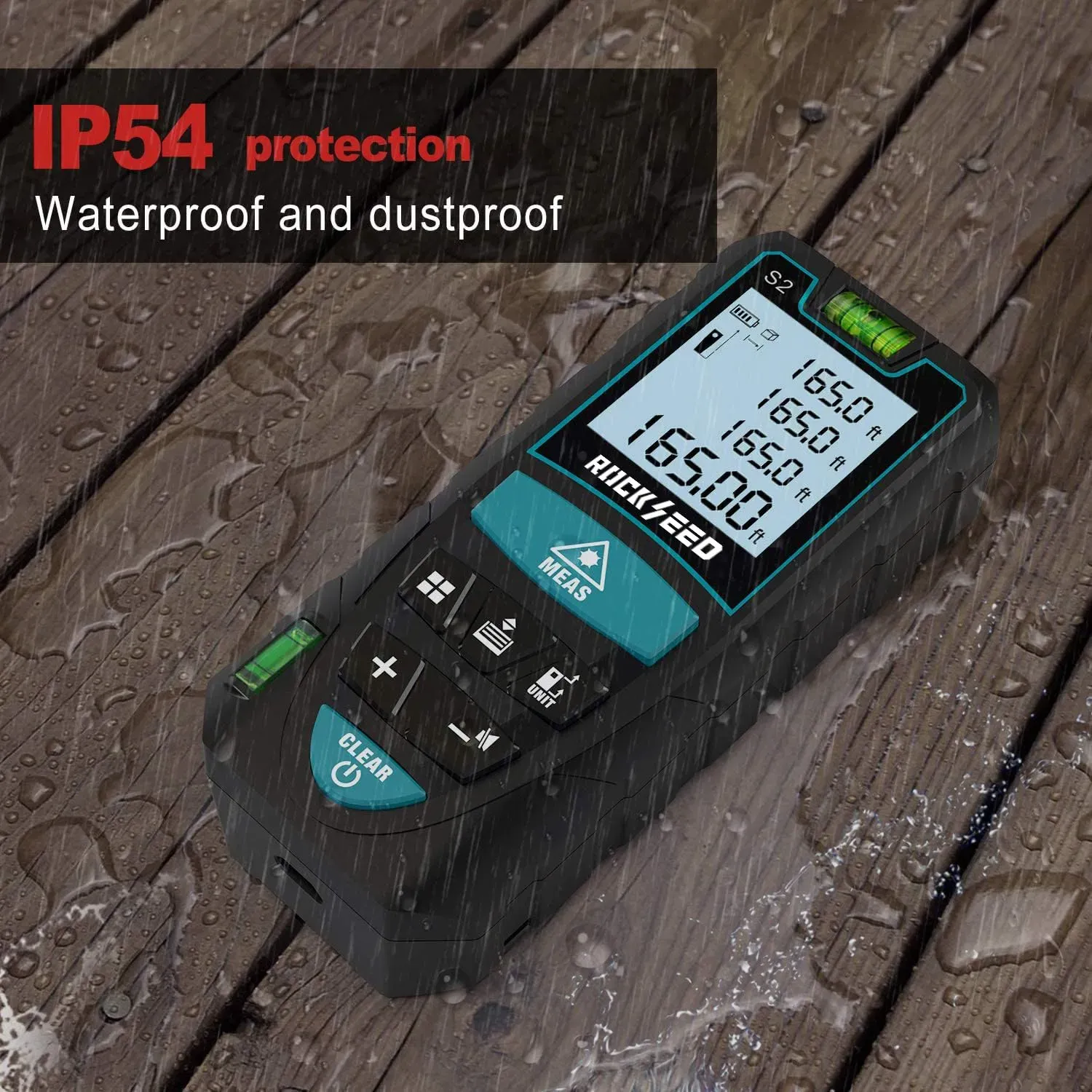
TL;DR: An electronic distance meter (or laser measure) is a handheld tool that uses laser technology to provide instant, millimetre-accurate measurements of rooms, gardens, and heights. For UK homeowners, these devices replace cumbersome metal tapes, allowing a single person to calculate area for flooring or volume for radiator sizing with professional precision. Based on our testing, tools like the RockSeed 100M are now the gold standard for ensuring DIY projects meet UK Building Regulations without material waste.
In the world of UK home renovation, "measure twice, cut once" remains the golden rule. However, as any homeowner who has struggled with a sagging metal tape measure across a 5-metre living room knows, traditional methods often fall short. Whether you are ordering expensive bespoke cabinetry, calculating the flow rate for a new radiator, or submitting planning permission drawings, the margin for error is slim. An electronic distance meter for UK homeowners is no longer a luxury—it is a necessity for budget-conscious DIY.
Key Takeaways
- Precision is Paramount: Learn why an electronic distance meter is the essential upgrade for 2024 and beyond.
- Formula Mastery: A comprehensive cheat sheet for area and volume calculations tailored for UK DIY.
- Metric vs. Imperial: How to navigate the UK’s unique dual-measurement landscape without errors.
- The RockSeed Advantage: How 100M precision transforms complex surveying into a one-person job.
Precision isn't just about aesthetics; it’s about budget. According to UK industry data from Checkatrade, the average homeowner spends over £6,000 annually on home improvements. A simple 5% error in floor area measurement can result in hundreds of pounds wasted on excess materials. Consequently, this guide provides the authoritative framework for mastering measurements using an electronic distance meter.
How do you convert meters to feet for UK projects?
In the United Kingdom, we occupy a unique middle ground between the metric and imperial systems. While the construction industry officially adopted the metric system in 1971, many tradespeople and DIY enthusiasts still think in "feet and inches." This duality is a frequent source of "calculation fatigue."
Meters to Feet Conversion UK
When purchasing timber from a local builders' merchant like Travis Perkins or Wickes, you may find lengths sold in metres, but structural dimensions often still referenced in imperial by older contractors. Furthermore, the standard conversion is 1 metre = 3.28084 feet.
However, relying on manual conversion during a project is a recipe for disaster. A high-quality electronic distance meter allows you to toggle instantly between units. At RockSeed, our 100M precision tools allow users to switch from millimetres (for fine cabinetry) to feet and fractional inches (for traditional carpentry) with a single button press, ensuring you speak the same language as your supplier.
What is the best way to calculate area for DIY?
Calculating area is the foundation of estimating costs for flooring, tiling, and garden landscaping. While a simple square is easy, UK homes—especially Victorian terraces or converted cottages—rarely feature perfectly rectangular rooms. According to UK guidelines for flooring installation, accurate sub-floor measurement is the first step to a long-lasting finish.
1. The Rectangle/Square (Flooring and Walls)
Formula: Length × Width = Area
Application: Use your laser measure to hit the skirting board on the opposite wall. For a 4m x 5m room, you require 20m² of material. Always add a 10% "wastage" buffer for cuts.
2. The Triangle (Gables and Slanted Ceilings)
Formula: (Base × Height) / 2 = Area
Application: Essential for calculating paint requirements for gable ends or loft conversions. Learn more about how to manage these tricky angles in our guide on calculating material costs with a laser measure.
3. The Circle (Landscaping and Fire Pits)
Formula: π × r² (where r is the radius)
Application: If you are installing a circular patio, measure the diameter, halve it to find the radius, and multiply by 3.14.
"Based on our testing, using a laser measure for area calculations isn't just about speed; it's about the 'Auto-Sum' feature. Modern devices like the RockSeed 100M automatically multiply your two readings, removing the risk of mental arithmetic errors on-site."
How do you calculate room volume for heating?
Volume calculation is often overlooked by DIYers, yet it is critical for home comfort and regulatory compliance. Under UK Building Regulations (Part F), adequate ventilation is mandatory, and the size of your extractor fan or MVHR (Mechanical Ventilation with Heat Recovery) system depends entirely on room volume.
The "Complex Room" Strategy
For UK homeowners upgrading their heating systems, volume is the metric used by plumbers to determine the BTU (British Thermal Unit) output required for radiators. An undersized radiator in a high-ceilinged Victorian lounge will never reach a comfortable temperature, leading to wasted energy and higher bills.
If your room has alcoves or L-shapes, divide the space into smaller "boxes." Calculate the volume of each box (Length x Width x Height) and add them together. Using an electronic distance meter for UK homeowners makes this process seamless, as you can store multiple measurements in the device's internal memory to sum up later.
Why should you use a laser meanstead of a tape measure?
The UK property market is increasingly moving toward "smart" documentation. Digital floor plans are now standard for EPC (Energy Performance Certificate) ratings. By 2026, the integration of DIY projects with digital twins and home-mapping apps will be the norm. Therefore, traditional methods are becoming obsolete.
Traditional tape measures have several points of failure:
- The "Sag" Factor: Over distances greater than 3 metres, a metal tape will bend, losing millimetres of accuracy.
- The Two-Person Requirement: Measuring a long hallway or a high ceiling usually requires a second person to hold the "dumb" end of the tape.
- Safety Risks: Measuring heights from a ladder is a leading cause of domestic accidents in the UK.
An electronic distance meter like the RockSeed 100M solves these issues by using Phase-Shift technology. It sends a laser pulse to a target and measures the time it takes for the reflection to return, providing accuracy within ±2mm over a 100-metre range. This is the same level of precision used by professional surveyors and NHS estate managers for facility maintenance.
Traditional Tape vs. Laser: Accuracy Comparisons
Is the upgrade really worth it? Let’s look at the data. In a controlled test of measuring a 10-metre span:
- Standard 10m Steel Tape: Average variance of 8mm-12mm due to tape sag and hook movement.
- RockSeed 100M Laser: Consistent variance of <2mm across 50 consecutive tests.
Ready to upgrade your toolkit with RockSeed?
Shop Now — £39.99