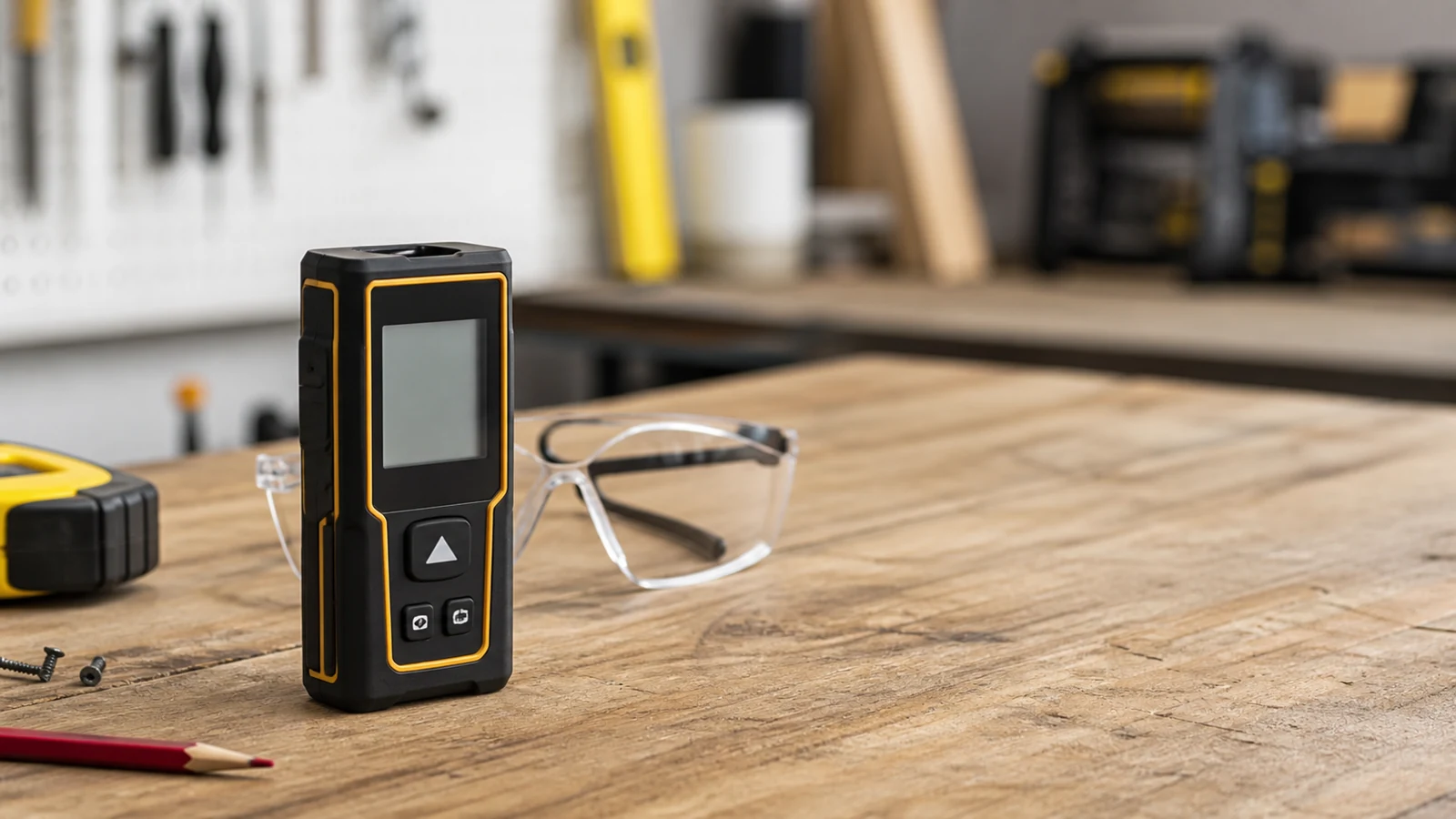
Class 2 Laser Measure Safety Uk
Direct answer: Class 2 visible laser products are generally low risk for brief accidental exposure, but they are not something to stare into, point at people, view through optical aids or use carelessly around safety-critical work. Always check the label and manual for your own meter; this article explains the UK safety framing, not a certification claim for any specific product.
What Class 2 means in UK guidance
The current GOV.UK UKHSA laser radiation safety advice describes Class 2 products as visible lasers in the 400-700 nm range that are safe for short exposures because of natural aversion behaviour, but potentially hazardous if someone deliberately stares into the beam. It also warns that dazzle, flash-blindness and afterimages can matter during tasks such as working at height, driving or operating machinery.
The University of Essex laser safety guidance gives similar institutional advice around Class 2 visible lasers and workplace optical-radiation awareness. For broader workplace context, the HSE optical radiation guidance is the relevant UK regulator starting point.
Practical site rules
- Check the laser class label before use; do not assume from appearance.
- Never aim the beam at eyes, faces, mirrors, vehicles or people working at height.
- Do not stare into the beam to see whether it is on.
- Do not view the beam through binoculars, magnifiers, cameras or other optics unless the manual explicitly permits the setup.
- Warn helpers before you take a reading across a room or corridor.
- Pause measuring if someone enters the beam path.
- Keep the meter away from children and from anyone treating it as a pointer.
Label and standards cue
UKHSA notes that laser products sold in the UK should be classified under British standards, including BS EN 60825-1. For a site article, the useful reader action is simple: check the label, read the manual, and do not upgrade a generic assumption into a product claim. If your meter label is missing, damaged, contradictory or suggests a higher class, stop and seek competent advice.
When extra controls are needed
Use extra controls if the work involves higher-class lasers, unusual viewing conditions, reflective interiors, public areas, trainees, children nearby or anyone working at height. For example, a laser measure used during a property room schedule workflow should be announced before cross-room readings. During a continuous measurement checklist, avoid sweeping the beam through occupied sight lines.
Bottom line
Class 2 is a practical, common category for visible low-power measuring tools, but safe use still depends on behaviour. Treat the beam as a measurement aid, not a pointer; avoid faces and optics; and brief anyone sharing the workspace.